


Vietnam is a captivating and colorful destination, rich in culture, history, and natural beauty. It continues to attract an increasing number of international visitors, with a significant portion coming from the United States. From vibrant, modern cities to peaceful countryside, charming ancient towns, majestic bays, and the simple yet heartfelt beauty of its people, Vietnam promises unforgettable experiences for every traveler.
However, before setting off on your journey to explore this beautiful country, there’s one crucial question that US citizens must keep in mind: Does Vietnam Require a Visa for US Citizens? The answer is Yes; a visa is mandatory to enter Vietnam. Failure to prepare the correct travel documents could result in being denied boarding or entry. That’s why thoroughly understanding the visa requirements in advance is essential to ensure your journey goes smoothly and without any unexpected problems.

Vietnam E-Visa: Does Vietnam Require a Visa for US Citizens?
Show table of content
- 1. Do US Citizens Need a Visa to Enter Vietnam?
- 1.1 Situations That Require a Visa
- 1.2 Short-term & long-term stay differences
- 2. Visa-Free Options (If Any)
- 2.1 Valid Temporary Residence Card
- 2.2 5-Year Visa Exemption Certificate
- 2.3 Valid APEC Business Travel Card (ABTC)
- 2.4 Visa-Free Entry to Phu Quoc Island
- 3. Types of Visas Available for US Citizens
- 3.1 Vietnam E-visa (Electronic Visa)
- 3.2 Visa on arrival (VOA)
- 3.3 Embassy/Consulate visa
- 4. How to Apply for a Vietnam E-Visa?
- 5. Vietnam Package Tour from USA
- 6. Common Mistakes to Avoid When Applying for a Vietnam Visa
- 7. Conclusion
1. Do US Citizens Need a Visa to Enter Vietnam?
Current visa policy for US passport holders (tourist, business,…). As of now, US citizens are required to obtain a visa to enter Vietnam, regardless of the purpose of travel, whether it’s for tourism, business, visiting family or friends, studying, or working.
Vietnam is not included in the list of countries eligible for unilateral visa exemption for US passport holders. This means that even for short visits (5-7 days), you must apply for a visa in advance before entering Vietnam.
1.1 Situations That Require a Visa
US citizens will need a visa in the following cases:
- Short-term or long-term tourism (including both independent travel and guided tours)
- Business trips, conferences, events, or temporary work assignments in Vietnam
- Visiting family, friends, or for other personal reasons
- Studying or attending training programs in Vietnam
- Long-term employment or relocation
Note: In some cases, if you’re only transiting through a Vietnamese airport for a short time and do not leave the international transit area, a visa may not be required. However, it’s always best to confirm this with your airline and check the current regulations before your flight.

1.2 Short-term & long-term stay differences
If you’re a US citizen planning a trip to Vietnam, make sure to carefully check the type of visa that matches your travel purpose and intended length of stay. Doing so will not only save you time but also help you avoid unnecessary issues at immigration checkpoints.
2. Visa-Free Options (If Any)
Currently, all US citizens are required to obtain a visa to enter Vietnam, except for a few special cases. These exceptions require travelers to hold valid and unexpired documents at the time of entry:
2.1 Valid Temporary Residence Card
This applies to foreign nationals who are living or working long-term in Vietnam, or who are married to a Vietnamese citizen.
If you already have a valid temporary residence card, you do not need to apply for a new visa when returning to Vietnam.
2.2 5-Year Visa Exemption Certificate
This exemption is available to:
- Overseas Vietnamese (Viet Kieu) who hold foreign citizenship
- Spouses, children, or parents of Vietnamese citizens
If you possess a valid 5-year visa exemption certificate, you can enter Vietnam multiple times without a visa, with each stay allowed for up to 180 days.
2.3 Valid APEC Business Travel Card (ABTC)
This applies to business travelers from APEC member economies participating in the ABTC program.
Note: U.S. citizens are not eligible for visa-free entry to Vietnam with the APEC card unless the card has the code “VNM” printed on it, which only applies to citizens of certain APEC economies, and not typically U.S. passport holders.
2.4 Visa-Free Entry to Phu Quoc Island
U.S. citizens do not need a visa if they meet all of the following conditions:
- Enter directly into Phu Quoc (by air or sea)
- Stay no longer than 30 days
- Depart from Phu Quoc Island to another country (not to other parts of Vietnam)
3. Types of Visas Available for US Citizens
US citizens have many visa options when coming to Vietnam, depending on the purpose and length of your stay to choose the appropriate visa application method. Below are the most popular ways to apply for a Vietnam entry visa for U.S. citizens:
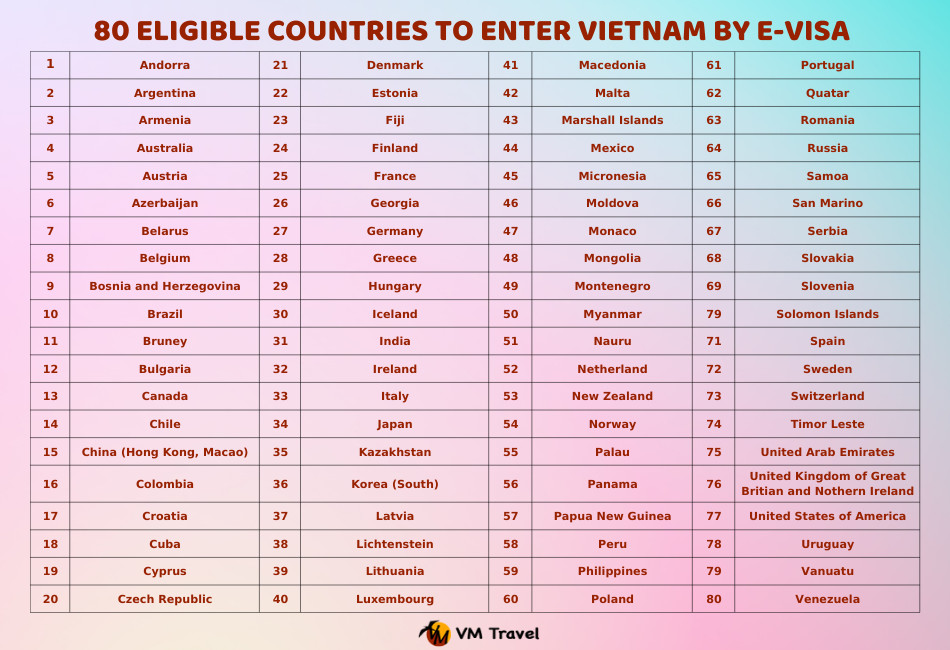
3.1 Vietnam E-visa (Electronic Visa)
- Eligibility: US citizens are eligible for the Vietnam e-visa.
- Validity: Up to 90 days, with either single or multiple entries.
- Purpose: Tourism, business, visiting family/friends, or short-term stays.
- Where to apply: Official Vietnamese E-visa Portal
- Processing time: Typically 3-5 business days.
- Fee: 25 USD (single entry) or 50 USD (multiple entry).
- Entry points: Valid at most international airports, land borders, and seaports.
Recommended for most travelers due to its simplicity and speed. View detail Vietnam Travel Visa for US Citizens

3.2 Visa on arrival (VOA)
As of recent updates, Visa on Arrival is no longer widely available to tourists, including U.S. citizens.
Previously, travelers could arrive at a Vietnamese airport with a pre-approval letter and receive a visa at the airport. Currently, VOA may still be possible for business travelers with sponsorship from a Vietnamese company, but it’s not recommended unless you’re certain of eligibility. Most travelers should now apply via the e-visa system or through the embassy/consulate.
3.3 Embassy/Consulate visa
- Where to apply: At the Vietnamese Embassy or Consulate in the U.S.
- Use cases: Stays longer than 90 days. Visa types not available through e-visa (student, work, long-term business visas)
- Application: In person or by mail, depending on the consulate
- Processing time: Varies, usually 5-7 business days
- Documents required: Passport, visa application form, photos, supporting documents (invitation letter)
Best for travelers needing a visa that the e-visa does not cover.

4. How to Apply for a Vietnam E-Visa?
Where to Apply?
Submit your application online via the official government website: https://evisa.xuatnhapcanh.gov.vn
Documents Needed?
- A passport valid for at least 6 months
- A digital passport-style photo and a scan of your passport’s bio page
- Entry/exit details and point of entry
- A credit or debit card (Visa/Mastercard)
Cost & Processing Time?
25 USD for single entry, or 50 USD for multiple entries. Processing time: 3-5 business days

5. Vietnam Package Tour from USA
Vietnam, a country boasting diverse beauty from the natural wonder of Ha Long Bay to the ancient charm of Hoi An and the vibrancy of Ho Chi Minh City, has quickly become a top-tier destination beloved by American travelers. With its rich history, incredible street food scene, and warm, welcoming people, Vietnam offers an immersive, memorable, and truly emotional journey through Asia.
To ensure you enjoy a complete and worry-free vacation, we have designed Exclusive Vietnam Package Tours from USA tailored specifically for visitors from the USA. Our packages are all-inclusive, covering everything from comfortable accommodations and safe transportation to unique cultural activities. We handle the logistics; you focus on the experience! Don’t let complicated planning prevent you from starting your next great adventure.

6. Common Mistakes to Avoid When Applying for a Vietnam Visa
Even though the Vietnam visa application process is relatively simple, especially with the E-visa, many travelers still run into avoidable issues. Here are some of the most common mistakes and how to avoid them:
- Incorrect passport information: Incorrect name, passport number or mismatched information may result in visa refusal or refusal of entry. Double check all information before submitting.
- Selecting the wrong port of entry: The e-visa is only valid at the specific port of entry you selected in your application. Ensure your arrival airport or border crossing matches exactly.
- Uploading a low-quality or invalid photo: A passport photo that is blurry, inappropriately sized or non-compliant may delay your application. See detailed instructions on size, format and tips at Vietnam Visa Photo Requirements.
- Applying too close to departure: Waiting until the last minute can be counterproductive if there are errors or delays. Apply at least 7-10 days before your trip.
- Using unofficial or scam websites: Some third-party websites charge hidden fees or send incorrect information. Apply only via the official website: https://evisa.xuatnhapcanh.gov.vn
- Assuming that Visa on Arrival (VOA) is still valid: Many travelers still make the mistake of planning to apply for a VOA, which is no longer available to most travelers. Use an e-visa or apply via an embassy if necessary.
Avoid these simple mistakes to ensure a smooth visa application process and trouble-free entry into Vietnam

7. Conclusion
Therefore, U.S. citizens planning to visit Vietnam, whether for tourism or business, are required to obtain a visa for entry. Understanding the right type of visa and applying through the correct channel will save you time and help avoid disruptions to your trip.
A visa is an essential part of international travel. So before booking your flight, take a few minutes to check the latest visa requirements and apply early to ensure your trip to Vietnam is smooth and well-prepared.
0 Comment